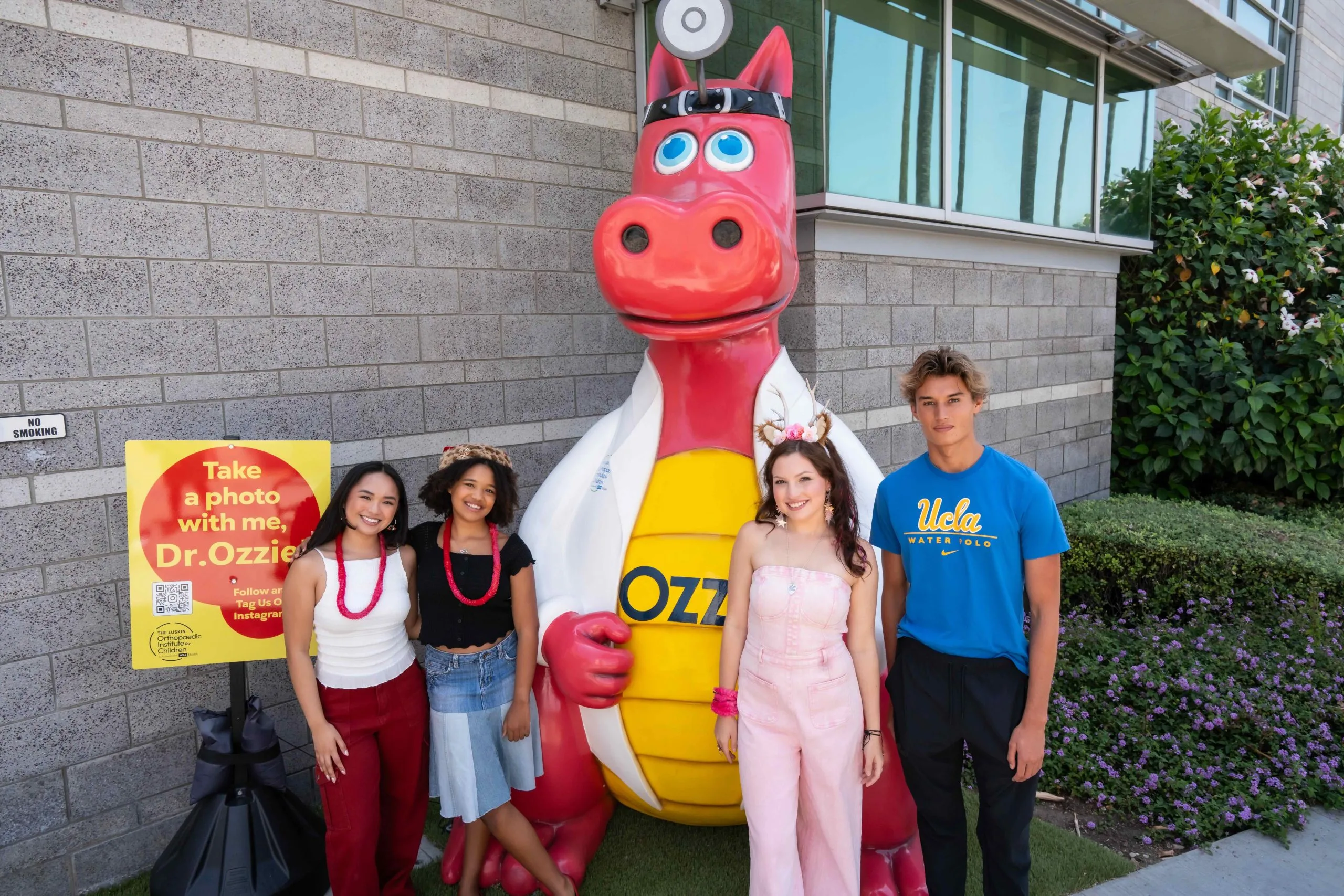
On Sept. 20, LuskinOIC celebrated National Care for Kids Day by spotlighting a new campus landmark: a 10-foot statue of our beloved dragon mascot, Dr. Ozzie. Installed earlier this year, the statue stands as a joyful symbol of resilience, healing, and hope for patients and their families.
Ozzie has been part of LuskinOIC since 2014, greeting children with high-fives and spreading cheer at events. Designed by advisory council member Dan Madden, the friendly dragon was inspired by a red playground figure and created to represent playfulness, resilience, and our mission of advancing health equity for every child.
“Dr. Ozzie’s statue, complete with his lab coat and stethoscope, ensures his impact will be felt for generations,” said Michael Sullivan, vice president and chief philanthropy officer at LuskinOIC. “His presence reflects our commitment to making every child feel safe, supported, and cared for throughout their medical journey.”
The statue now welcomes families at our downtown Los Angeles campus, serving as both a favorite photo spot and a lasting reminder of our dedication to children’s health.
[Top photo: From left to right: LuskinOIC talent ambassadors, Nayah Damasen, Bella Blanding, Daire McLeod & patient ambassador, Alex Heenan with Dr. Ozzie]
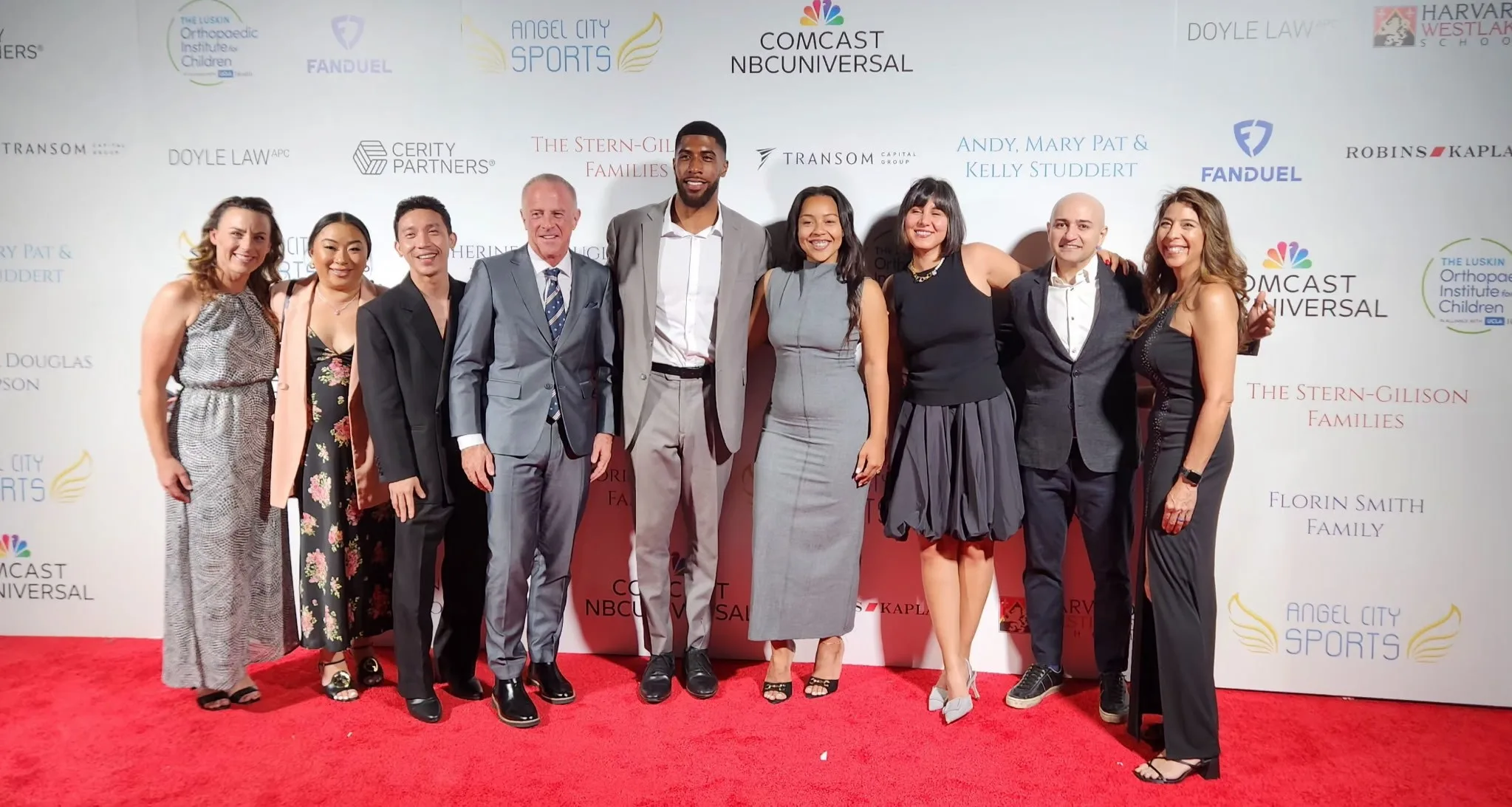
LuskinOIC proudly sponsored and attended the 2025 Angel City Sports Stars and Stripes Gala, an inspiring evening celebrating the Paralympic movement and honoring Gene and Tracy Sykes for their leadership and advocacy.
The gala was hosted by former LuskinOIC patient ambassador and two-time Paralympic gold medalist Ezra Frech, whose journey continues to inspire countless young athletes.
Representing LuskinOIC were Vice President Michael Sullivan; Dr. Soroosh Baghdadi, director of cerebral palsy); Joanna Stover, sports medicine; Chris Carone, director of orthopedic rehabilitation; and Board Member Iran Hopkins.
Angel City Sports continues to provide adaptive sports and recreation opportunities to thousands of athletes of all ages and abilities throughout Southern California. It was a joyful night of community, inclusion, and celebration of excellence in movement and mission.
This September, LuskinOIC launched a campaign to support National Preparedness Month, providing families in our community with practical resources to stay safe during emergencies. Our blog covered emergency preparedness essentials, including building 72-hour emergency kits, creating family communication plans, and specific safety protocols for earthquakes and fires common to Southern California. The coordinated social media campaign broke down complex preparedness information into shareable content, highlighting key safety tips and reminders throughout the month.
The campaign aligned with LuskinOIC’s mission by extending our care beyond clinical services to include family safety education. We provided practical guidance especially relevant for families with children who have medical conditions or mobility needs, ensuring emergency plans addressed ongoing healthcare requirements.
This initiative demonstrated LuskinOIC’s commitment to comprehensive family wellness, showing that our dedication to children’s health includes prevention and safety education that protects entire families during emergencies.
Disaster Preparedness highlighted on LuskinOIC socials
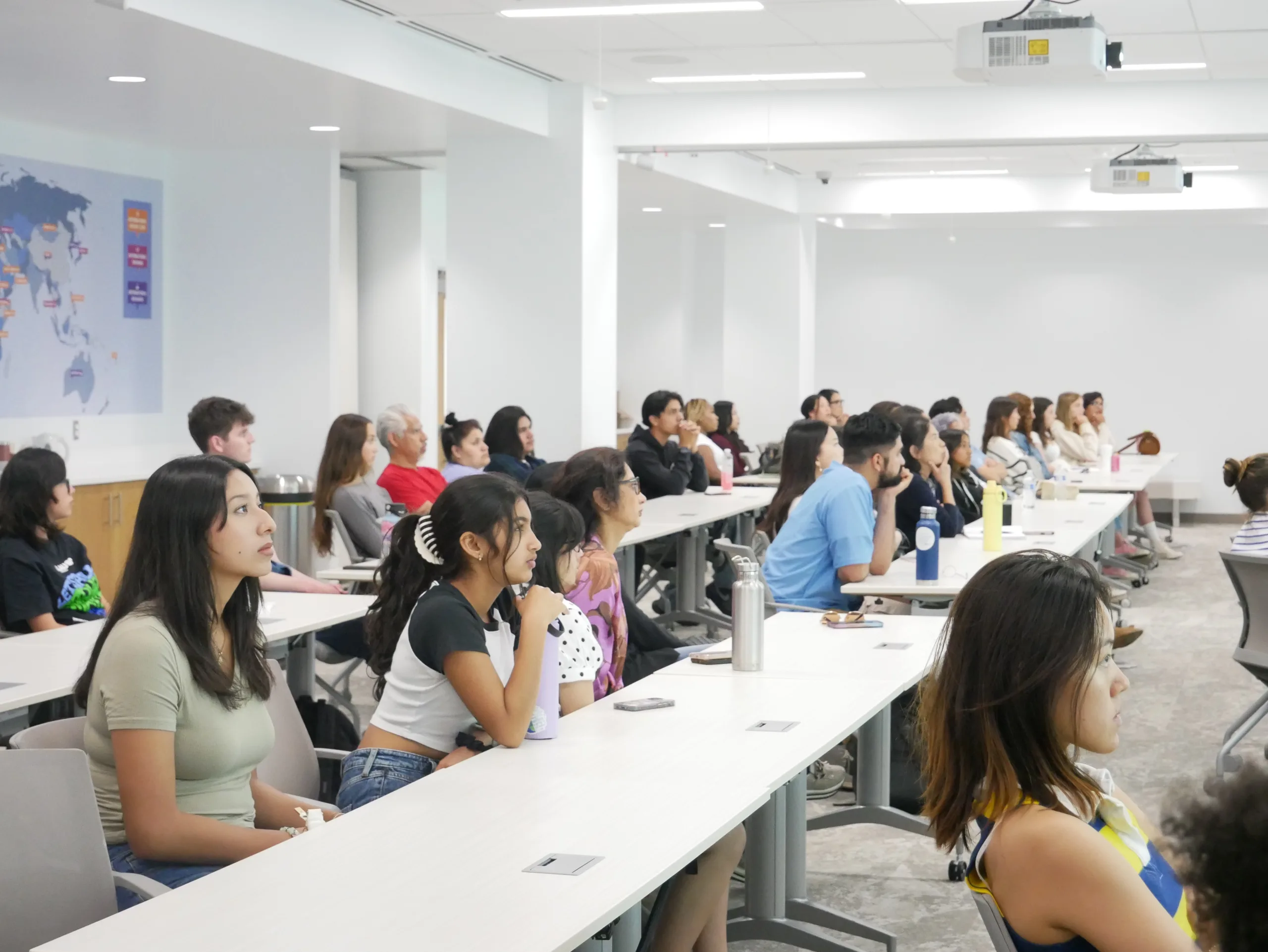
On Sept. 5, we hosted our final general volunteer orientation of the year at LuskinOIC. It was one of our largest turnouts ever, with 97 new volunteers—including high school students (16 from Ortho High), college students, and support group members.
During our orientation, we shared expectations for volunteers, introduced departments, and provided guidance to help them get started. Each attendee also received a raffle ticket for a chance to win a LuskinOIC-branded Sole bicycle. As the anticipation grew, the Vice President and Chief Philanthropy Officer at LuskinOIC, Michael Sullivan, announced that Naomi Machado, an incoming freshman at Santa Monica College, was the winner.
To close, we divided our attendees into three tours, offering a personalized and interactive experience for each volunteer. Each group was led by one of our volunteer staff who shared their own experiences and insights and gave the volunteers a look into how they could make an impact across departments.
Michael Sullivan speaking to the new volunteers.
[Top photo: Photo of new volunteers listening to the orientation.]
LuskinOIC is offering new Sports Medicine webinars to support secondary school athletic trainers with affordable continuing education, now featured on our new webinar page.
Fall Kickoff Mini-Series: Low-cost CEUs (two per session) on prevention, evaluation, management, and rehab of pediatric and adolescent sports injuries. Practical, evidence-based guidance trainers can apply immediately.
Beat the Heat: Two sessions on urgent safety issues. Dr. Josh Goldman reviews 2023 Concussion Consensus updates for secondary schools; Dr. Amanda Honsvall covers heat illness prevention, WBGT monitoring, and emergency management. Each 45-minute session includes a Q&A.
These programs meet state requirements, provide life-saving knowledge, and strengthen care for young athletes whose bodies are still developing. Registration information and additional details about upcoming webinar dates are available on our website.
After 36 years of dedicated service, Mary Beth Perrine will retire from LuskinOIC this November. To celebrate her impact and all she means to this organization, the foundation will host a Retirement Hoedown on Palm Drive, featuring live music by Country Vision Band, a delicious chicken dinner from Robert’s Catering, and refreshing mocktails from Curly Bartender. Guests are invited to wear their best country western attire for an afternoon of line dancing and a special program honoring Mary Beth, including a surprise announcement from LuskinOIC CEO Dr. Anthony Scaduto.
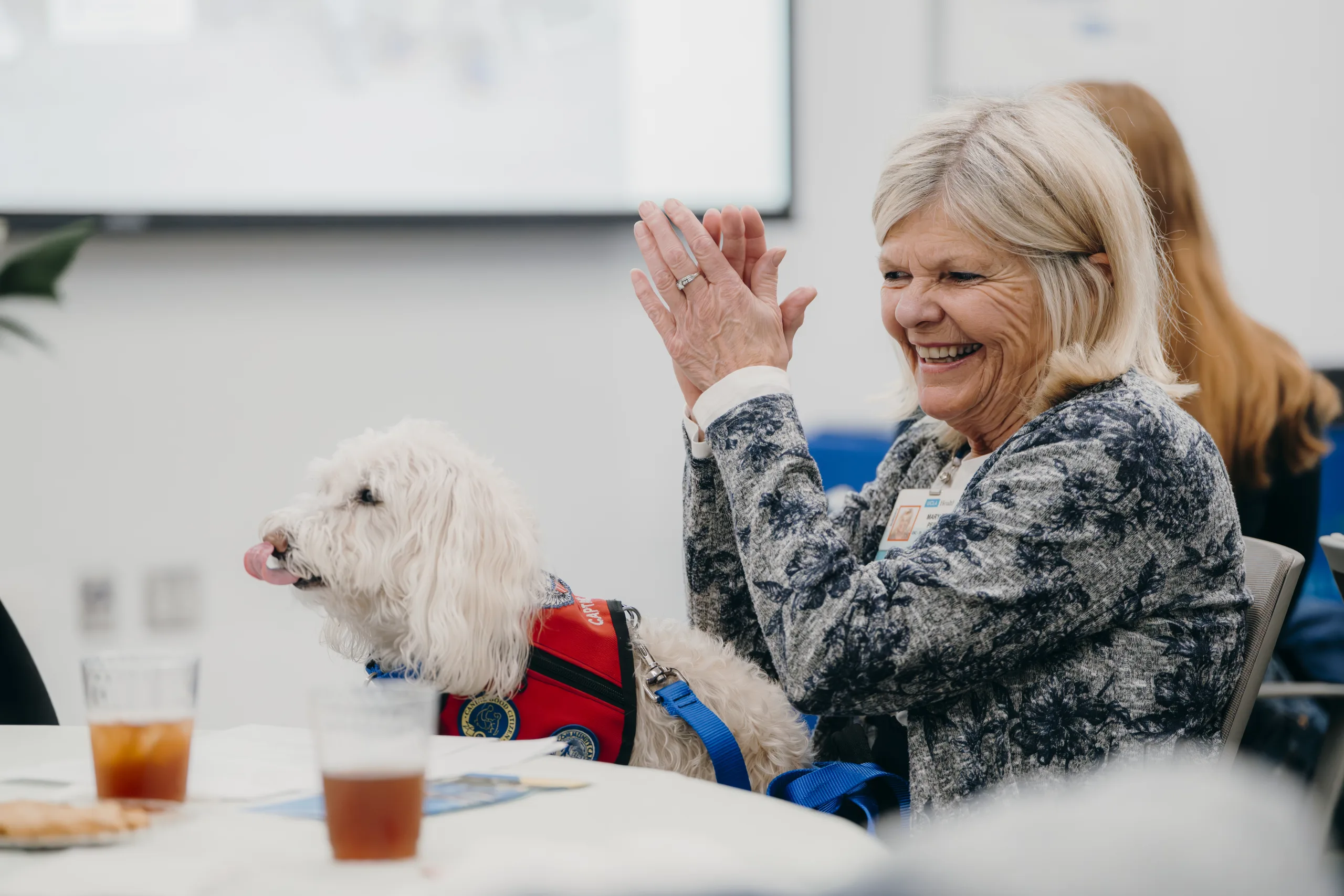
Mary Beth with patient ambassador.
Mary Beth is LuskinOIC personified. Her inexhaustible energy and unbridled enthusiasm are only rivaled by her deep dedication to LuskinOIC and its mission to provide outstanding, comprehensive care for children regardless of their family’s ability to pay. Greeting everyone she meets with a hug and a smile, Mary Beth and her trusty canine pal and “Chief of Morale” Captain have brought endless joy to patients, providers, and staff alike.In honor of the Perrine family’s generational commitment to ensuring children receive expert care, Mary Beth has established the Perrine Family Patient Ambassador Fund to support patient ambassadors and their families to ensure their needs, wishes, and special requests can all be met—whether medical or personal. Click here to donate in honor of Mary Beth today by clicking “One-Time Donation” and selecting the “Mary Beth Patient Ambassador Fund” as the designation.
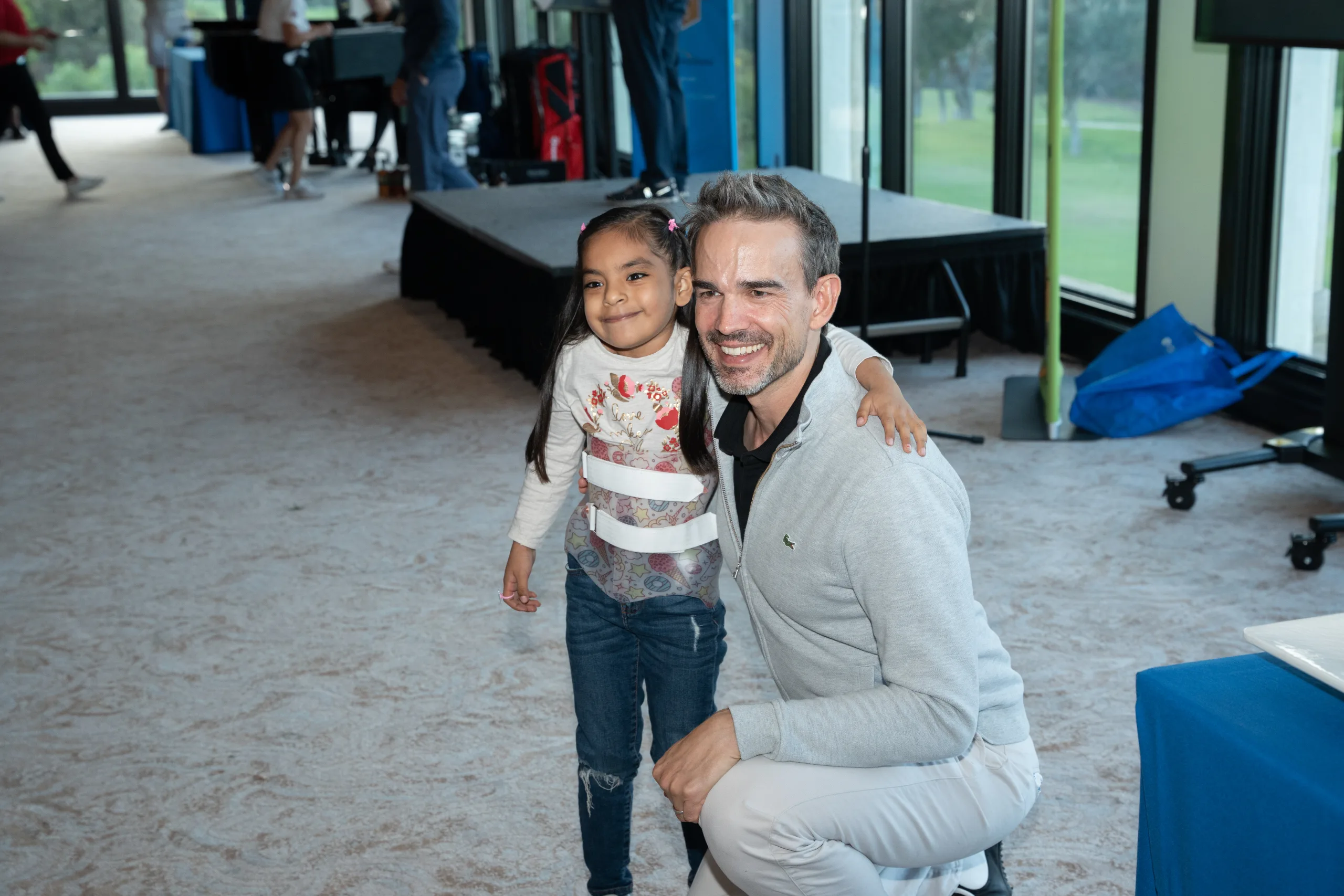
Every year at the Swing for Kids Golf Classic, we present the Fox Family Community Inspiration Award, named in honor of former board member Ned Fox for his dedication and service to LuskinOIC. This year’s recipient is the family of actor Christopher Gorham and his wife, Anel.
KultureCity at our 2022 Gala
All three of their children have been patients at LuskinOIC, and the family has given back for more than a decade. The Gorhams encouraged their children to volunteer at events and supported our fundraising galas from the very first gala at Fox Studios, securing celebrity involvement from friends including America Ferrera, Ana Ortiz, Debby Ryan, Kathryn Gallagher, and the Band from TV.
Emcee Chris at 2024 GolfChris’ golf team with patient ambassador
For their support and love for each other, their time, talents, and treasures, we are honored to present the Gorham family with the 2025 Fox Family Community Inspiration Award.
[Top Image: Chris with Scoliosis Patient at 2022 Golf]
Speaker, mentor, writer, and LuskinOIC board member, John Kobara, is a well-known social entrepreneur and a facilitator of change. Kobara is a proud third-generation Japanese American who strives to lend a helping hand to institutions and people, helping them become stronger versions of themselves. Kobara holds multiple academic degrees and has pursued post-graduate studies, but it was through his professional work and volunteer efforts that he truly grew as a person. Being a practicing philanthropist, he has raised money for human development organizations throughout his life, serving as a guide to thousands of individuals, families, and foundations. His organization, Random Acts of Progress, is just one example of his mission to coach individuals and organizations to align their work with their deepest passions, promoting education, equity, and personal growth.
Kobara released his latest book titled “Quest,” which has 121 questions that prompt the reader to reflect and write their thoughts in the book.
If you are interested in discovering insights about your own personal journey and growth, join us on November 12, 2025, from 3:30–5:00 p.m. at The Luck Family Conference Center at LuskinOIC Downtown. We will have an interactive reading and discussion focused on the book, and explore practical ways we can apply the concepts from the book.
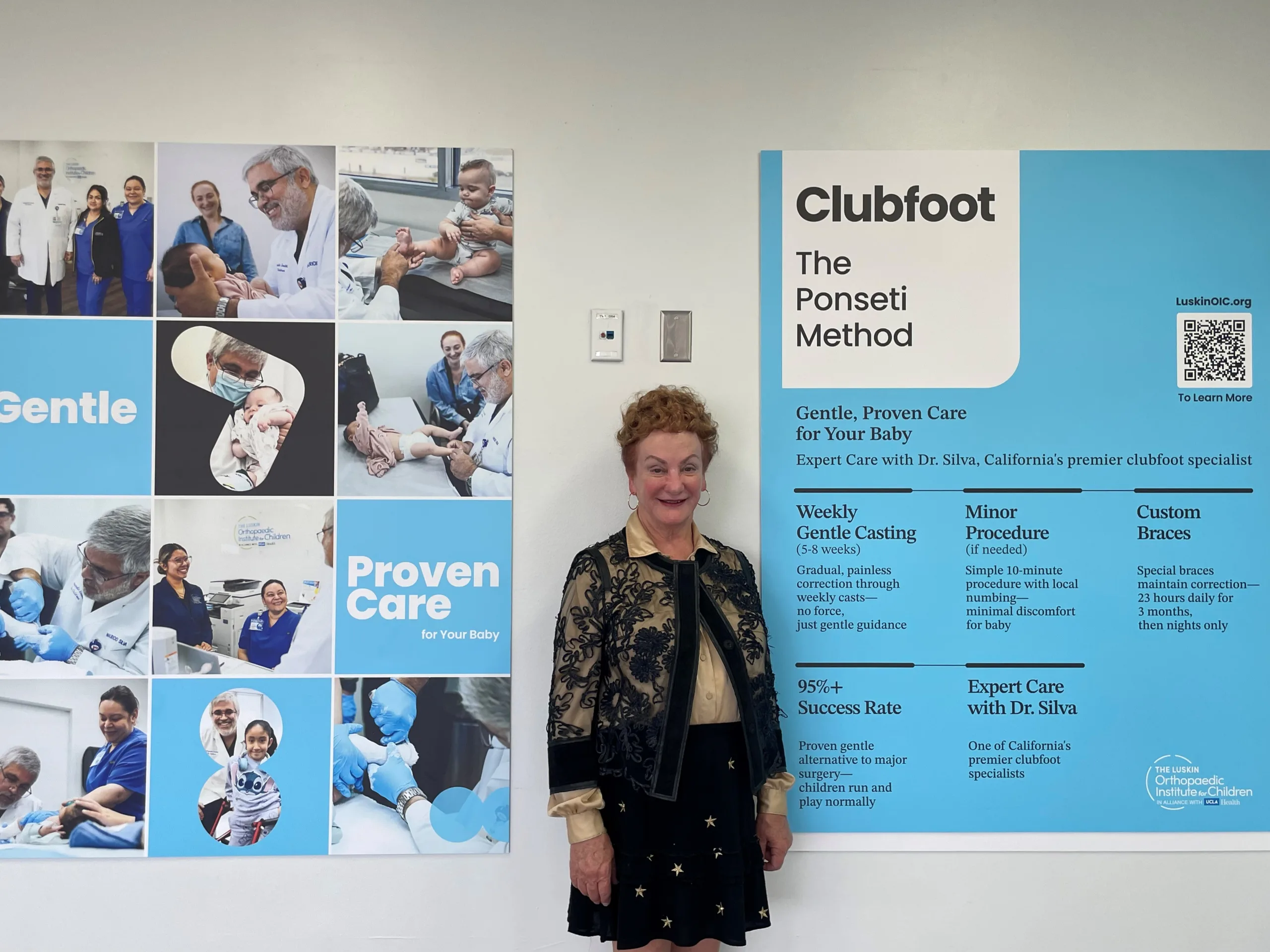
The LuskinOIC Foundation recently received a heartfelt phone call from former patient Sheila Chaffin. Mrs. Chaffin first came through our doors in June 1949 as an infant diagnosed with clubfoot—or as she affectionately referred to herself, “an out-ie.” From infancy to age four, she was treated by Dr. Ward Randall, spending years in braces and casts.
She recalls visiting during a time when polio was still widespread, with patients separated into “polio” and “non-polio” lines upon arrival. Children were wheeled through the hospital in wicker chairs—memories that have stayed with her for a lifetime.
After treatment, she went on to earn degrees from USC and Cornell University, build a career as an architect, raise a family, and pursue ballroom dancing—all possible thanks to the care she received at LuskinOIC as a child.
Now 76 and living in Alabama, Mrs. Chaffin recently returned to our campus. She was deeply moved by how much had changed and how much had stayed the same — in our mission to care for children in need. She met with Dr. Mauricio Silva, medical director and chief of clubfoot care, before making a $25,000 gift to support our Clubfoot Specialty Clinic. We are honored by her generosity.
[Former patient Sheila Chaffin returned to LuskinOIC to share her story of being a patient in the 1950s, recalling how she was treated with love and dignity as a child; she noted that Dr. Silva exemplified the same compassion today!]
As the nation celebrates National Care for Kids Day on Sept. 20, LuskinOIC is spotlighting a special campus landmark that embodies its mission of caring for children: Dr. Ozzie, a 10-foot statue of the beloved dragon mascot.
Learning that your child needs orthopaedic surgery can be overwhelming for the entire family. At Luskin Orthopaedic Institute for Children (LuskinOIC), we understand that children process information differently depending on their age and developmental stage. Our specialists have compiled this guide to help you prepare your child for surgery in ways that provide comfort, build trust, and reduce anxiety.
Why Preparation Matters
Research consistently shows that well-prepared children experience:
Less preoperative anxiety
Better postoperative pain management
Reduced risk of psychological distress
Greater cooperation with medical staff
Taking time to prepare your child not only helps them through the immediate surgical experience but can positively influence how they approach medical care throughout their lives.
General Guidelines for All Ages
Before diving into age-specific approaches, here are some universal principles to keep in mind:
Be Honest and Build Trust
Always tell the truth, but in age-appropriate terms
Never promise “no pain” – instead, explain that discomfort can be managed
Address questions directly; if you don’t know an answer, offer to find out together
Focus on the Positive Outcome
Explain how the surgery will help (better movement, less pain, straighter limbs)
Use concrete examples relevant to your child’s interests (“You’ll be able to ride your bike again”)
Involve Your Child
Give age-appropriate choices when possible (which stuffed animal to bring, what flavor of popsicle after)
Have them help pack their hospital bag
Let them create a list of questions for the doctor
Age-Specific Approaches
Toddlers (1-3 years)
At this age, children are mainly concerned with separation from parents and unfamiliar environments.
What to Say:
Use simple, concrete terms: “The doctor will fix your leg to help you walk better”
Avoid abstract explanations about illness or technical terms
Focus on what they will see, hear, and feel: “You’ll wear special pajamas and the room will have lots of lights”
Helpful Preparation Activities:
Read picture books about going to the hospital
Use dolls or stuffed animals for medical play
Familiarize them with basic medical equipment like stethoscopes and bandages
Maintain normal routines as much as possible before and after
Preschoolers (3-5 years)
Children this age have vivid imaginations and may create frightening scenarios to fill information gaps.
What to Say:
Explain surgery using concrete terms: “The doctor will fix the bone in your arm while you’re taking a special nap”
Correct misconceptions immediately: “The surgery is not a punishment and is not happening because you did anything wrong”
Be specific about timeframes: “After lunch, after one TV show”
On Surgery Day:
Bring distractions (small toys, tablet with favorite shows)
Comfort items from home
Photos of family members if you can’t be present at all times
School-Age Children (6-12 years)
These children can understand more complex explanations and may have specific concerns about pain, being awake during surgery, or missing school.
What to Say:
Provide more detailed explanations of procedures: “The doctor will use special tools to straighten the bones in your foot”
Explain the purpose of anesthesia: “Medicine will help you sleep deeply through the surgery so you won’t feel anything”
Address pain honestly: “You might feel sore afterward, but there will be medicine to help, and the doctors and nurses will make sure you’re comfortable”
Helpful Preparation Activities:
Watch age-appropriate videos explaining their procedure
Create a list of questions for the doctor together
Practice relaxation techniques like deep breathing
Make a recovery calendar marking milestones and follow-up appointments
On Surgery Day:
Bring activities that require concentration (books, puzzles, games)
Consider a new small gift as a special distraction
Encourage them to bring a personal item that gives them strength
Adolescents (13-18 years)
Teens are concerned with privacy, independence, and how the surgery might affect their appearance or social life.
What to Say:
Provide more technical information if they’re interested
Include them in all discussions with the medical team
Be straightforward about recovery timeframes and limitations
Address concerns about appearance, scars, or mobility directly
Helpful Preparation Activities:
Research their condition and procedure together
Connect with others who have had similar procedures if possible
Have them prepare their own questions for the medical team
Discuss and plan pain management strategies
Help them plan how to stay connected with friends during recovery
On Surgery Day:
Respect their privacy
Provide technology to stay connected with friends
Bring comfortable clothes that accommodate bandages/casts
Let them make decisions about visitors when appropriate
Addressing Common Fears
Fear of Pain
Explain the different ways pain will be managed
Emphasize the role of the pain management team
Teach rating pain on a scale to communicate effectively
Practice comfort measures like deep breathing and visualization
Fear of Anesthesia
Explain that special doctors (anesthesiologists) will monitor them the entire time
Compare it to a very deep sleep, not regular sleeping
Reassure that they will wake up when the surgery is complete
Arrange to meet with the anesthesiologist beforehand if possible
Fear of the Unknown
Show pictures of the pre-op area, operating room, and recovery room
Explain the sequence of events from arrival to discharge
Introduce them to as many team members as possible before surgery
Consider a hospital tour if available
What to Bring to the Hospital
Comfort items (blanket, stuffed animal, pillow)
Entertainment (books, tablet, headphones)
Comfortable, loose-fitting clothes for going home
Any regular medications in original containers
Insurance cards and identification
List of questions for the medical team
Snacks for parents/caregivers
When to Seek Additional Support
Consider professional support if your child:
Shows extreme anxiety or behavioral changes
Has had traumatic medical experiences in the past
Has pre-existing anxiety or mood disorders
Has developmental or cognitive challenges that affect understanding
The Bottom Line
With thoughtful preparation, honest communication, and age-appropriate support, children can navigate the surgical experience with resilience. At LuskinOIC, our goal is not just successful surgical outcomes but also positive experiences that build children’s confidence in their ability to overcome challenges.
Remember, you know your child best. Trust your instincts about how much information they need and what comforting approaches will work for them. Our team is here to support both you and your child every step of the way.
For more information about preparing your child for orthopaedic surgery at LuskinOIC, please visitLuskinOIC.org. Our Specialists are available to answer questions and provide additional resources tailored to your child’s specific needs.
Disasters can happen anytime, anywhere, often without warning. Each year, they disrupt countless lives and cause lasting damage to homes and communities. September is National Preparedness Month; a perfect time to create your emergency plan and kit.
Build Your Emergency Kit
Emergency services may not be available right away. Prepare to be self-sufficient for at least 72 hours. Here’s what you need:
Basic Supplies:
Water: 1 gallon per person, per day (3-day supply for evacuation, 2 weeks for home)
Food: Non-perishable, easy-to-prepare items (same as above)
Flashlight, batteries, manual can opener
Battery-powered or hand-crank radio (NOAA Weather Radio if possible)
First aid kit and 7-day supply of medications
Cell phone with chargers
Important documents (ID, insurance, medical info)
Hygiene supplies, emergency blanket, extra cash, area maps
Add for Specific Needs:
Medical equipment (glasses, hearing aids, etc.)
Baby items (formula, diapers)
Pet supplies
Extra keys, two-way radios, games for kids
Consider Based on Local Risks:
N95 masks, matches, rain gear
Work gloves, duct tape, bleach, tools for home
Extra clothing, blankets, and entertainment
Make a Family Plan
Talk with your family about local hazards, how to evacuate, and where to meet if separated. Plan how to communicate if cell networks are down. Assign a primary contact person outside your area.
Earthquake Safety
Indoors:
Duck, Cover, and Hold — don’t run outside
Stay in bed if already there; cover your head
Avoid doorways unless sure they’re load-bearing
Outdoors:
Stay away from buildings and power lines
If near the coast, move to higher ground
In a vehicle:
Pull over safely, avoid overpasses and power lines
Stay inside the car until shaking stops
If trapped:
Don’t light matches or shout
Tap on pipes or use a whistle
Cover your mouth and stay calm
Fire Safety
In fire-prone areas like Southern California:
Check smoke detectors regularly
Clear dry brush around your home
Keep fire extinguishers and teach family to use them
Always know at least two ways out of your neighborhood
Evacuate immediately if ordered
Keep your gas tank at least half full
Stay Prepared
Update your kit and review your plan at least once a year. Preparedness saves lives, reduces anxiety, and helps families respond effectively.
Information sourced from UNews
Stay connected, Stay informed!
Join the LuskinOIC Newsletter for news, updates, stories, and more!
About LuskinOIC
Luskin Orthopaedic Institute for Children (LuskinOIC) is a Los Angeles-based pediatric orthopedic institute providing world-class musculoskeletal care to children regardless of their family’s ability to pay or immigration status. Founded in 1911 and in strategic alliance with UCLA Health since 1998, LuskinOIC combines award-winning specialists, advanced treatment, and hands-on research to help kids with everything from fractures and scoliosis to clubfoot and cerebral palsy heal, move, and thrive.